
Barriers Installed Before Further Damage Develops
Emergency Tarping in Blackshear for roofs compromised by sudden failure or severe weather impact
Georgia's thunderstorms can strip shingles from large sections in minutes, and falling trees create openings that turn bedrooms into rain collectors before homeowners can arrange full repairs. Dollar Roofing & Gutters provides emergency tarping services in Blackshear that cover these vulnerabilities quickly, using secured heavy-duty material to block water intrusion until permanent roofing work begins. The gap between when damage occurs and when repairs are completed often spans days or weeks due to material sourcing, insurance processing, and contractor scheduling, making temporary protection the difference between manageable roof damage and ruined ceilings, soaked insulation, and electrical hazards.
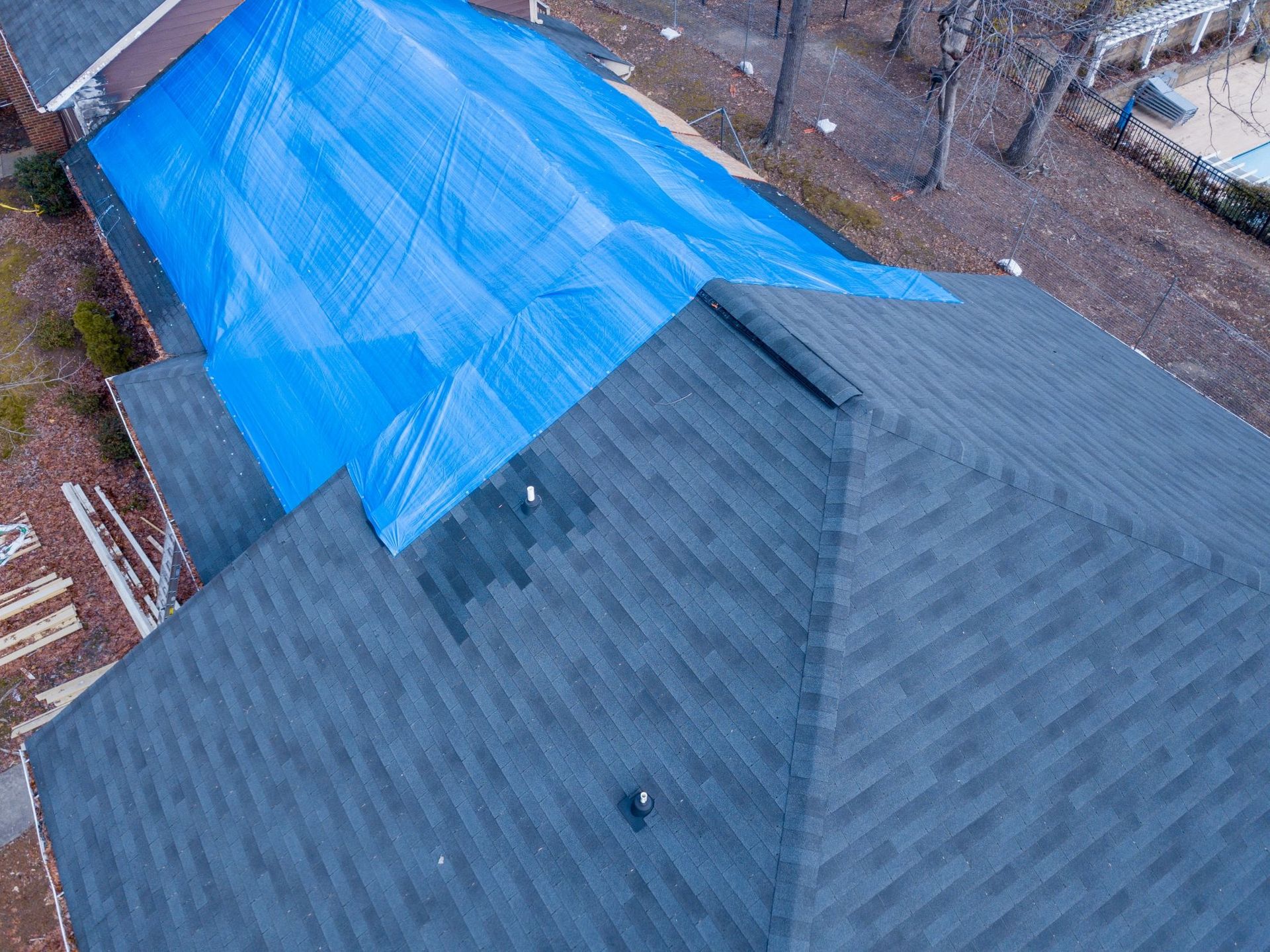
Tarping involves more than throwing a sheet over the damaged area—proper installation requires securing edges to prevent wind from getting underneath and tearing the cover loose, extending coverage beyond the visible damage to ensure water running down intact sections doesn't channel under the tarp edge, and anchoring with fasteners driven into solid decking rather than relying on weights that shift during storms. Placement accounts for roof pitch and drainage patterns so water sheds away from the covered area instead of pooling on the tarp surface where weight could cause sagging or punctures.
Contact Dollar Roofing & Gutters for fast tarping deployment when storm damage exposes your roof structure.
Why Secure Placement Withstands Weather
Tarps must remain intact through the additional rain and wind that typically follow initial storm damage, which requires attachment methods that distribute stress across multiple anchor points rather than relying on a few fasteners that could tear through the material under sustained wind load. Edges are secured at close intervals to eliminate gaps where wind pressure can lift the tarp, and overlapping sections are positioned shingle-style so water flows over seams instead of penetrating where sheets meet. The installation creates a continuous barrier that behaves like temporary roofing rather than a loose cover that flaps and fails.
Once tarping is installed, rain stops entering the house even during subsequent storms, interior spaces remain dry while insurance adjusters schedule inspections and contractors order materials, and the exposed roof deck is protected from UV damage and moisture absorption that would worsen before permanent repairs begin. Attic insulation stays dry and functional, ceilings don't develop water stains or structural sagging, and belongings in affected rooms remain protected from weather exposure.
Tarps are designed to hold for weeks or months if necessary, but they're not permanent roofing solutions and will eventually degrade under UV exposure and weather cycling. Extended tarp coverage increases the risk of secondary leaks developing at anchor points or from material breakdown, so transitioning to permanent repairs as soon as insurance and scheduling allow is the goal. Tarping is the essential first response in insurance claim situations, since carriers expect homeowners to mitigate further damage promptly after an initial event.
Answers to Frequent Service Questions
Homeowners facing sudden roof failure need clear information about what tarping involves, how long protection lasts, and how it fits into the broader repair process.
What areas get covered during emergency tarping?
Coverage extends several feet beyond visible damage in all directions to ensure water flowing across undamaged sections doesn't find entry points at the damage perimeter, and the tarp overlaps intact shingles to create a weatherproof transition zone.
How do tarps handle Blackshear's wind and rain patterns?
Professional installation uses reinforced polyethylene tarps rated for high wind resistance, with fasteners placed every twelve to eighteen inches along edges and seams to prevent uplift, and strategic overlap that sheds water without creating pockets where wind can catch and tear material loose.
When should tarping happen relative to insurance claims?
Tarping should occur immediately after damage is discovered, before contacting insurance, since carriers require homeowners to prevent further damage as a policy condition. Photos taken before tarping document the original damage for claim purposes, and tarping costs are typically reimbursable as part of the claim.
What happens if storms continue after tarping is installed?
Properly secured tarps withstand additional weather events of similar or moderate intensity, maintaining protection through rain and wind until permanent repairs replace the temporary covering. Severe subsequent storms may require tarp inspection and re-securing if anchor points loosen.
How long can a tarp remain effective before replacement is needed?
Quality tarps hold for several months under normal conditions, but Georgia's intense UV exposure and temperature cycling gradually weaken material, so permanent repairs within four to eight weeks prevent the need for tarp replacement and reduce risk of secondary failure.
Dollar Roofing & Gutters responds to tarping requests throughout Blackshear, securing damaged roofs quickly to prevent interior damage while permanent repair plans are developed. Call (478) 244-4734 for immediate tarping support when roof failure creates weather exposure.